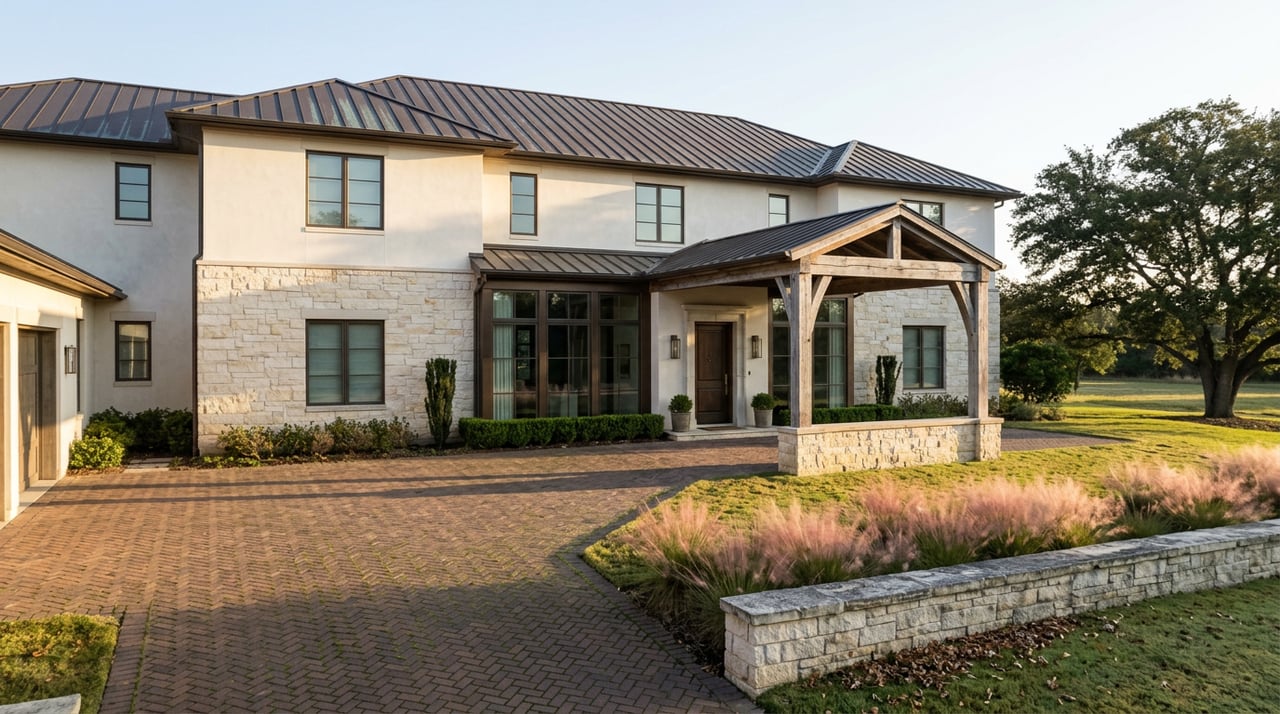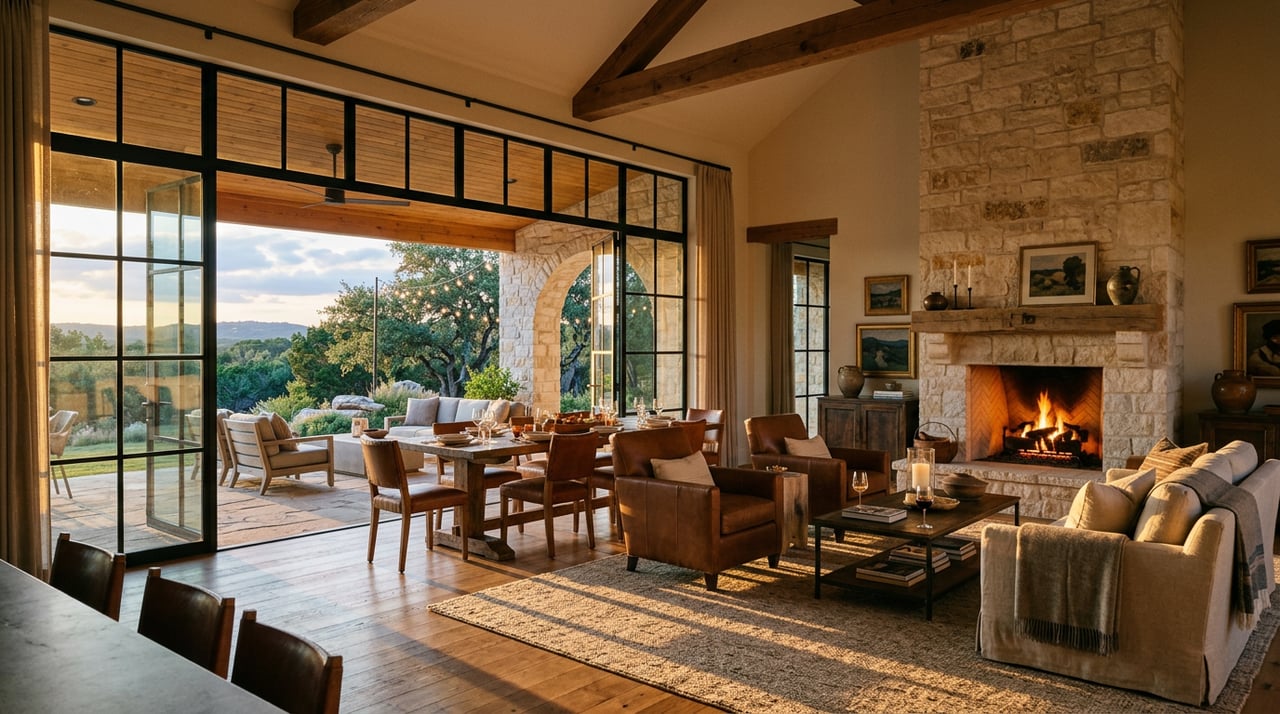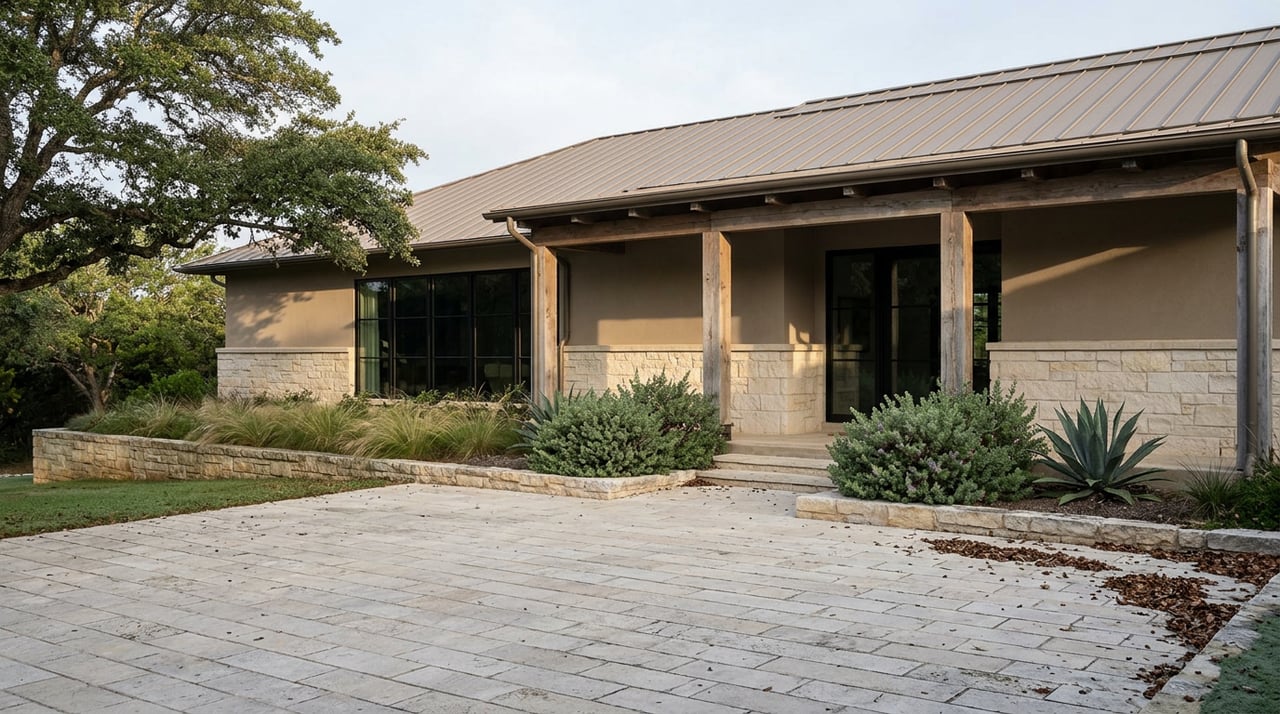
Ask two buyers who just closed on similarly priced homes in Bee Cave what they pay in property taxes, and you might get two different numbers that have nothing to do with square footage, lot size, or even school zoning. The gap comes from a line item that rarely shows up in a listing description or a portal search filter: whether the parcel sits inside a Municipal Utility District or Public Improvement District.
This matters more in Bee Cave than in most Austin-area suburbs, because the city's older, established communities and its newest master-planned neighborhoods sit on opposite sides of that line. A buyer comparing two $1.5 million homes across town could be looking at a tax bill that differs by several thousand dollars a year, and the only place that difference shows up before closing is on the parcel record itself.
The line nobody puts in the listing
A Municipal Utility District, or MUD, is a special taxing entity that finances water and sewer infrastructure through bonds. Those bonds get repaid over time through an added line on the property tax bill, so a MUD tax is not a flat fee. It is debt service that shows up year after year until the district retires its bonds. A Public Improvement District, or PID, works differently. It levies an assessment on properties inside its boundary to fund things like roads or streetscapes, and while it is often described as temporary, the assessment period can run long enough to matter to a buyer thinking about resale.
Neither of these is the same as a planned unit development, sometimes shortened to PUD, which is a zoning term rather than a taxing district. Confusing the two is an easy mistake for anyone relocating from a state where these structures do not exist, and it is the kind of mistake that only becomes obvious once the first tax bill arrives.
Travis County Municipal Utility District No. 18 is a real, active example of this inside Bee Cave city limits. It is a functioning public entity with its own board and its own budget, and its existence is exactly why a buyer cannot assume that "Bee Cave" means one uniform tax rate. It means whatever rate applies to that specific parcel, and that depends entirely on which district lines the parcel falls inside.
What the older communities have that the newer ones don't
Spanish Oaks is a 1,200-acre guard-gated community built around a Bobby Weed golf course, with custom estate homesites that generally range from roughly $1.5 million into the eight figures. It carries no MUD or PID beyond the standard Travis County and Lake Travis ISD levies. Falconhead, one of the larger established communities in the city, is in the same position. Neither has an additional special district layered onto the tax bill.
Contrast that with two of Bee Cave's newer builds. The Homestead offers larger lots and bigger floor plans than most of the city's other neighborhoods, but it sits inside a MUD, and that district's portion of the tax bill runs in the range of $3,000 to $5,000 a year depending on the home's assessed value. Provence, a newer community near Highway 71 and Hamilton Pool Road with production builders like David Weekley, Ashton Woods, Westin Homes, Newmark Homes, and Drees Homes, carries MUD and PID assessments as well.
This is not a coincidence of timing. Older, already-developed communities like Spanish Oaks and Falconhead did not need bond financing for infrastructure that was already in place decades ago. Newer subdivisions built on raw land often do, and the bonds that paid for the streets and utility lines running through them get repaid by the homeowners who live there now.
| Community | MUD or PID | What it adds |
|---|---|---|
| Spanish Oaks | None | Standard Travis County and Lake Travis ISD rates only |
| Falconhead | None | Standard Travis County and Lake Travis ISD rates only |
| The Homestead | MUD | Roughly $3,000 to $5,000 per year |
| Provence | MUD and PID | Assessment layered on top of standard rates |
Sweetwater and Lake Pointe fall closer to the established side of this divide, with Lake Pointe in particular built around an existing community boat ramp and proximity to both Lake Austin and Lake Travis rather than new bond-financed infrastructure. The point is not that newer means worse. It is that the tax structure underneath a home is a separate question from its price, its finishes, or its amenities, and it does not track neatly with any of them.
Why the citywide number hides this
Bee Cave's median effective property tax rate, calculated across all its homes for the current 2026 tax year, works out to about 0.83 percent, which is lower than both the Texas state median of 1.48 percent and the national median of 1.02 percent. That headline figure is accurate, and it is also close to useless for a specific buyer, because it averages together parcels with no special district at all alongside parcels carrying an active MUD.
The most recently adopted combined nominal rate for a Bee Cave home in Lake Travis ISD, before any special district is added, works out to roughly $1.55 per $100 of assessed value. Lake Travis ISD accounts for about $1.04 of that, Travis County about $0.38, and the City of Bee Cave itself a comparatively small $0.02. A MUD or PID assessment sits on top of that base, not inside it, which is exactly why two homes with the same assessed value can generate two very different bills.
The Texas homestead exemption softens this for a primary residence by reducing the taxable value used for school district taxes and capping how much assessed value can rise each year. It is a meaningful tool for long-term owners, but it does not touch a MUD or PID line. Those assessments are calculated separately and keep showing up whether or not the exemption is in place.
The twenty-year math
Run the simple version of this forward. A MUD tax of $4,000 a year, roughly the midpoint of the range cited for The Homestead, adds up to $80,000 over a twenty-year hold. That is money spent on debt service for infrastructure that a buyer in Spanish Oaks or Falconhead never pays at all, because that infrastructure was already built and paid for before either community reached its current form.
This does not make a MUD-taxed home a poor choice. Bond-financed districts eventually retire their debt, and a buyer who confirms where a district sits in its repayment schedule may be looking at a cost that declines meaningfully over the years they own the home. But that is a fact worth knowing before an offer goes in, not after the first tax statement arrives.
What to check before you write an offer
- Pull the parcel record and look for the "Taxing Jurisdictions" list, which will show any MUD or PID attached to that specific address rather than the neighborhood in general.
- Ask the seller or the title company for the three to five most recent annual tax bills so the actual dollar history is visible, not just an estimate.
- If a MUD is involved, ask where the district stands in its bond repayment schedule, since a district close to retiring its debt carries a different long-term cost than one that just issued new bonds.
- In gated or golf communities, separate the HOA question from the club question. Spanish Oaks is a good example of a community where HOA dues covering gates and common areas are entirely distinct from private club initiation and monthly dues, and buyers sometimes conflate the two when comparing carrying costs.
- Confirm whether the homestead exemption has been filed and whether it will transfer, since a prior owner's exemption does not carry over automatically to a new buyer.
A few questions worth asking directly
Does a MUD tax ever go away? It can, once the district retires the bonds that created it, though the timeline depends on the district's specific repayment schedule rather than a fixed number of years.
Does the homestead exemption reduce MUD or PID charges? No. The exemption applies to the taxable value used for county and school district calculations. Special district assessments are calculated on their own and are not offset by it.
Is a PUD the same thing as a MUD or a PID? No. A planned unit development is a zoning designation that describes how land can be used. It carries no taxing authority on its own, unlike a MUD or PID.
The median price on a Bee Cave listing tells a buyer what the home costs to purchase. It does not tell them what the home costs to hold, and in a city where some of the most established communities carry no special district at all while some of the newest carry two, that second number deserves its own line of diligence before any offer becomes a contract.
If you are comparing homes across Bee Cave's communities and want a clear read on what a specific address actually carries in taxes and assessments, Bessie Ostertag can walk through the parcel-level details with you before you write an offer. Let's Connect.